Sub-Zero Refrigerator
Leaking Water
Sub-Zero leaking water or pooling inside? The top cause is a clogged or frozen defrost drain. Same-day Seattle repair before it damages your floor.
When a Sub-Zero leaks water onto the floor or pools inside the cabinet, the number-one cause is a clogged or frozen defrost drain backing up, and it is usually cleared the same day before it can reach your flooring. Call (425) 532-3360. Our service call fee is $89, applied toward the completed repair.
What you're seeing
There are really two leaks people describe. The first is water inside the cabinet: a puddle under the crisper drawers, or a growing sheet of ice across the floor of the freezer that you have to chip out. The second is water on the kitchen floor, appearing at the base of the unit or seeping out from under a built-in with no obvious source. Which one you are seeing changes where we look, so it is worth noticing before you call.
Water inside the cabinet almost always traces back to the defrost system and its drain, while water on the floor is more often a supply line, a valve, or the evaporation pan underneath. On ice and water models there is a third suspect, the dispenser and ice maker plumbing, which adds fittings and tubes that can weep. Note whether the leak is constant or shows up in cycles, since a drain that backs up only after each defrost behaves very differently from a fitting that drips all day.
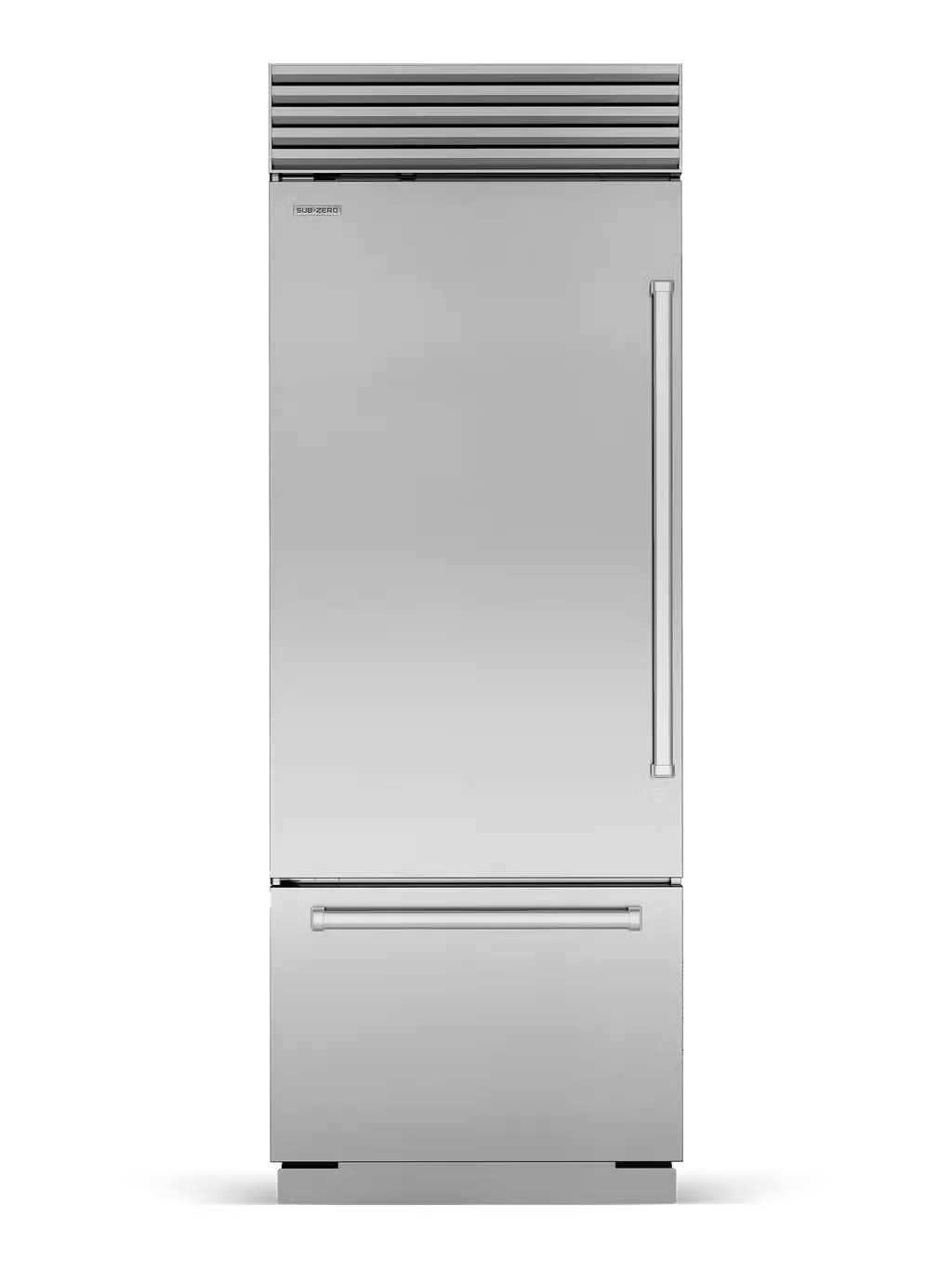
Likely causes, in the order we check them
Clogged or frozen defrost drain
This is the leading cause of interior water by a wide margin. During each defrost the melt from the evaporator is supposed to run down a drain tube to the pan below. Food debris, mineral scale from Seattle's water, or a plug of ice can block that tube, so the melt has nowhere to go. It backs up, freezes into a sheet on the freezer floor, and eventually overflows forward under the crisper drawers. We clear the tube and flush it, and we address the ice that caused the freeze so it does not simply reform.
Cracked or overflowing evaporation pan
Under the cabinet sits a drain pan where defrost water is meant to collect and evaporate. If that pan cracks, shifts out of position, or overflows because the drain above is dumping too much water at once, the result is a puddle on the floor with a bone-dry interior. On built-ins this is easy to miss because the pan lives behind the lower grille, so a floor leak with a clean cabinet always sends us there.
Water inlet valve, supply line, or filter head
On ice and water models, the plumbing itself leaks. A loose compression fitting on the supply line, a cracked plastic filter housing, or a water inlet valve seeping at its seat will drip steadily behind or below the unit. Because this water often runs down the back wall and pools out of sight, owners frequently blame the drain when the real source is a fitting a few inches away. We pressure-check the line to find it.
Worn or dirty door gasket causing condensation
A hardened or torn gasket lets warm, humid air into the cabinet, where it condenses on cold surfaces and drips. Seattle's damp climate makes this worse than it would be in a dry region. The tell is condensation and small water beads near the door edge rather than a puddle sourced from the drain. Reseating or replacing the gasket restores the seal and stops the sweating.
Dispenser or ice maker fill-tube leaks
On units with a through-door dispenser or an internal ice maker, the fill tube, the dispenser line, or a dislodged tube behind the ice maker can weep water down into the compartment or onto the floor. A fill tube that overshoots the mold, or an inlet valve that fails to fully close, will leave water where no drain problem could explain it. These get traced back to the specific tube or fitting rather than treated as a general leak.
A defrost fault feeding the drain problem
Sometimes the leak is a symptom of a bigger issue. If the defrost heater or control is failing, the evaporator ices heavily, then dumps an unusual volume of melt that the drain cannot handle, or the drain itself freezes solid. When we find a recurring drain leak, we check the defrost system so we fix the cause and not just the puddle.
How we repair it
Determine interior versus supply-side first
We establish where the water actually originates, an interior drain issue or an external plumbing leak, before opening anything. That single distinction directs the entire diagnosis and keeps us from chasing the wrong system.
Clear and flush the defrost drain
For interior leaks we clear the drain tube of debris, scale, and ice, flush it to confirm it runs freely, and check the drain heater or trough on models that have one. Then we look at why it clogged or froze so it stays clear.
Pressure-check water lines and the valve
For floor leaks on ice and water models, we inspect and pressure-test the supply line, the filter housing, and the inlet valve, tighten or replace the failing fitting, and confirm the connection holds under normal supply pressure.
Replace the gasket, pan, or valve with OEM parts
Whether the culprit is a worn gasket, a cracked evaporation pan, or a leaking valve, we fit genuine Sub-Zero parts for the 600, 700, and BI series, then run the unit through a cycle and verify the area stays dry before we consider the job done.
When to call right away
A refrigerator leak is one of the few appliance faults that damages your home while you wait. Water from a backed-up drain or a leaking valve runs into hardwood, warps cabinetry, and soaks subfloor, and in the built-in installations common across Capitol Hill and Madison Park it can reach a finished space below before you ever notice a puddle. Standing water near an appliance's electrical connections is its own hazard. If water is actively pooling, shut off the unit's water supply, protect the floor, and book a same-day visit. Catching a leak the day it starts is almost always cheaper than the flooring repair that follows a week of ignoring it.
Related problems
Questions about this problem
Why is there water pooling under the crisper drawers in my Sub-Zero?
That is the classic sign of a defrost drain that has clogged or frozen over. Melt water from the normal defrost cycle cannot drain, so it backs up and spills forward into the bottom of the fresh-food section under the drawers. Clearing and flushing the drain tube resolves it, though we also check why it clogged so the same puddle does not return.
Can I clear a Sub-Zero defrost drain myself?
You can try the gentle version: empty the freezer, let any ice on the floor melt, and flush warm water through the drain opening at the back of the compartment to loosen a soft clog. If the drain is frozen solid, packed with scale, or backs up again within days, the blockage is deeper or the defrost system is involved, and that is a technician job. Never use a sharp tool in the drain, since puncturing the tube turns a clog into a much worse leak.
How much does it cost to fix a Sub-Zero that is leaking water?
Clearing a drain or replacing a fitting is a quick same-day job, a gasket runs roughly 200 to 400 dollars depending on the model, and a cracked pan or a valve sits in between. Nearly every leak is inexpensive relative to the flooring damage it causes if ignored. Diagnosis starts with the $89 service call, applied toward the completed repair.
Why is there a sheet of ice on the floor of my Sub-Zero freezer?
That ice sheet is defrost melt that froze because the drain below it is blocked. Instead of running out to the pan, the water pools on the freezer floor and refreezes with each cycle, building a layer you have to chip away. It will keep coming back until the drain is cleared and any defrost fault behind it is corrected.
Is a little condensation inside my Sub-Zero normal?
A light film of condensation after the door has been open a while, or during a humid Seattle stretch, is normal and clears on its own. Persistent beads of water near the door edge usually mean the gasket is no longer sealing, and standing water in the bottom of the cabinet is a drain issue, not condensation. Those two are worth a look.